

Systems' cooling technology does not replace existing air or liquid cooling systems but instead embeds a diamond-enhanced layer within the GPU's thermal conduction path. By integrating synthetic diamond with conductive materials like gallium nitride and incorporating it as part of the chip packaging, it fundamentally optimizes the heat transfer path from the chip to the thermal interface, reducing interfacial thermal resistance.
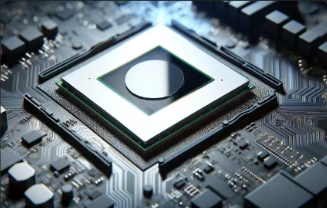
Official data indicates that under high-temperature data center conditions reaching up to 50°C, this solution delivers approximately a 15% improvement in performance per watt while maintaining full GPU load without throttling. For a data center deploying 10,000 H200 GPUs, this equates to an effective computational output equivalent to adding 1,500 additional GPUs or reducing hardware investment by approximately 15%. This directly impacts data center capital expenditure efficiency and total cost of ownership. Simultaneously, the servers' stable operation at temperatures up to 50°C significantly reduces data centers' dependence on specific geographic environments.
Shortly before this, NVIDIA also confirmed its next-generation Vera Rubin architecture GPUs will fully adopt a new “diamond-copper composite thermal interface + 45°C warm water direct liquid cooling” solution. These dual initiatives underscore diamond's pivotal role in AI thermal management. Beyond resolving heat dissipation bottlenecks for high-performance chips, this advancement unlocks growth opportunities for superhard materials across semiconductors, data centers, and advanced computing. Diamond-based superhard materials are now positioned at the forefront of industrial transformation.